



- Stock: Out Of Stock
- Breeder: Cornell University, USA
- specification: kontajner
The Glenora variety is a blue, seedless table grape hybrid developed with the aim of combining the attractive appearance and flavor of classic grape varieties (Vitis vinifera) with the high resistance and reliable fruiting of hybrids.
Breeder: New York State Agricultural Experiment Station (Geneva, Cornell University), bred in 1952, released for propagation in 1970.
Parent varieties: Ontario (Vitis labrusca) × Suffolk Red (Vitis vinifera)
Type: blue, seedless table grape (hybrid)
Species: interspecific hybrid (Vitis labrusca × Vitis vinifera)
Distribution: mainly the USA (northeast and central regions), Canada, the United Kingdom, Poland, and the Czech Republic/Slovakia in small vineyards and home gardens.
Viticultural characteristics
Early ripening: ripens approximately 10–14 days before the Concord variety, i.e., in early to mid-September.
Frost resistance: very good – tolerates temperatures down to about -24 °C.
Disease resistance: medium to good – relatively resistant to downy mildew (Plasmopara viticola) and botrytis, but may be more susceptible to powdery mildew (Uncinula necator) in warmer regions.
Yield: high and reliable.
Grape characteristics
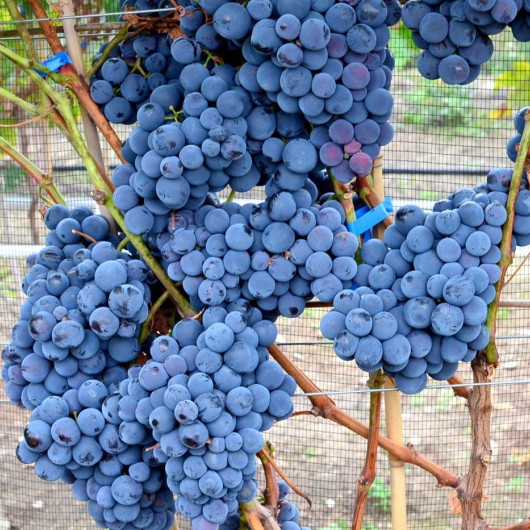
Clusters: medium to large, cylindrical or slightly conical, well-filled.
Berries: medium-sized, dark blue to black, with a thin but firm skin and no seeds.
Pulp: juicy, tender, with a pronounced yet pleasant muscat-fruity aroma.
Taste: sweet, harmonious, with refreshing acidity.
Use
Primarily a table grape for fresh consumption. Also suitable for the production of juice, jelly, and raisins. Some small producers also use it for light semi-sweet wines or for blending with other hybrid varieties.